Why Wet Soil Can Affect Tree Stability in Portland
Portland’s rainy season brings much-needed moisture to the region, but prolonged wet conditions can also change the way soil supports trees. For homeowners with mature trees, especially those growing near homes, driveways, fences, or other structures, understanding how wet soil can affect stability is an important part of responsible tree care.
A tree that has stood safely for decades can still develop concerns when its root system, soil conditions, or surrounding landscape change. Knowing what to watch for can help homeowners identify potential problems before they become emergencies.
How Does Wet Soil Affect Tree Roots?
A tree depends on its root system for both water and physical support. When soil becomes heavily saturated, its structure can change, particularly in areas with drainage issues or compacted ground.
Saturated soil can reduce the soil’s ability to provide firm support around a tree’s roots. This doesn’t mean that every tree in wet soil is at risk of falling, but it is one factor an arborist may consider when evaluating tree stability.
The condition of the root system matters just as much as what can be seen above ground.
Older Trees May Need a Closer Look
Mature trees are an important part of Portland’s urban canopy, but age can bring structural changes that aren’t always obvious from the ground.
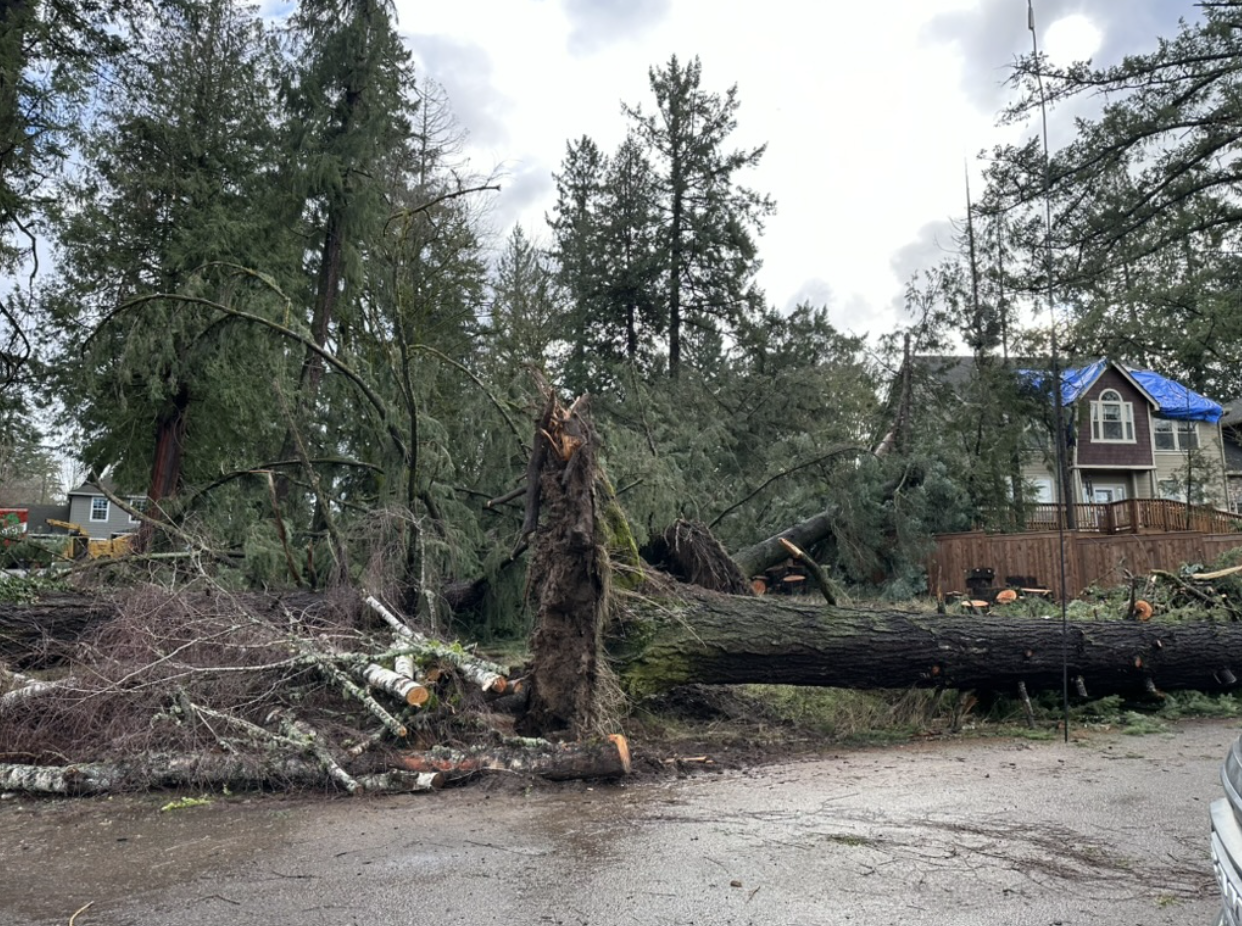
Over time, roots can be affected by construction, soil compaction, changes in grade, drainage, or damage to the surrounding landscape. A large tree with a compromised root system may become more vulnerable when wet soil combines with strong winds.
This is one reason a professional assessment looks at more than just branches and leaves.
Watch for Signs of Root or Stability Problems
Homeowners should pay attention to changes around the base of a tree, especially during the rainy season.
Potential warning signs include:
New or worsening lean
Soil lifting or cracking near the tree
Exposed or damaged roots
Changes in the ground around the root flare
Newly exposed roots after heavy rain
Dead or declining branches
Cracks in the trunk or major limbs
One sign alone does not necessarily mean a tree is unsafe. However, noticeable changes are worth having evaluated, particularly when a large tree is located near a structure.
Why Location Matters
A tree’s condition is only part of the picture. Where it stands also matters.
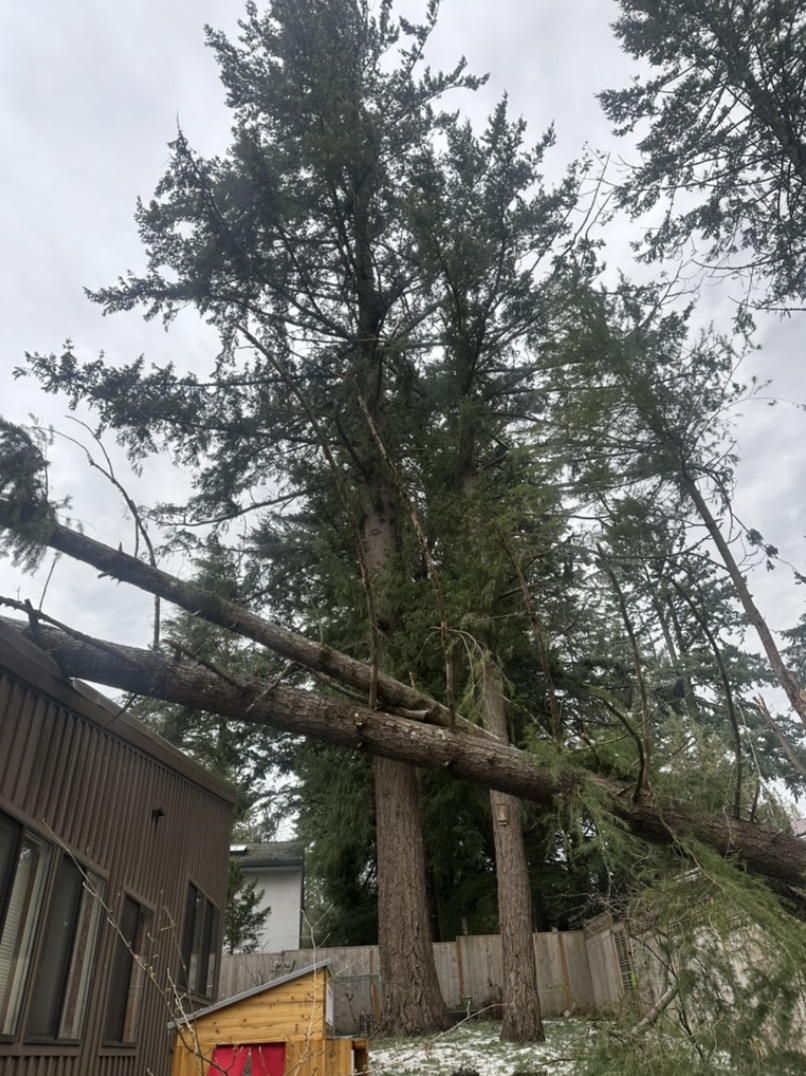
A mature tree near a house, driveway, sidewalk, fence, or other frequently used area presents different considerations than a tree in an open portion of a property.
Urban properties can also have limited root space. Construction, paving, landscaping, and drainage changes can affect the environment around established trees over time.
For Portland homeowners, looking at the tree and its surroundings together provides a more complete picture of potential risk.
Don’t Assume a Leaning Tree Needs to Be Removed
A leaning tree isn’t automatically a hazardous tree.
Some trees naturally grow at an angle, while others may develop a lean because of their environment. The important question is whether the lean is stable and whether there are other signs of structural or root problems.
An arborist can evaluate the tree’s structure, root zone, surrounding conditions, and potential targets before recommending a course of action.
Depending on the situation, the appropriate solution may involve pruning, monitoring, cabling or bracing, plant health care, or removal.
When Should You Have a Tree Assessed?
If you’ve noticed a new lean, changes in the soil around your tree, exposed roots, or other unusual changes after periods of heavy rain, consider having the tree professionally assessed.
This can be particularly important for large mature trees located close to homes or other structures.
A professional assessment can help determine whether the tree has a manageable maintenance need or whether there is a more serious structural concern that requires attention.
Protecting Portland’s Urban Canopy
Healthy, established trees provide shade, habitat, and environmental benefits throughout Portland. Proper tree care isn’t always about removing a tree when a problem appears. In many situations, the goal is to understand the tree’s condition and determine what can be done to maintain it safely.
Urban Timber Tree Service provides professional tree assessments, pruning, cabling and bracing, plant health care, and removal services based on the individual needs of each tree.
If you’re concerned about a mature tree on your Portland property, an assessment can give you a clearer understanding of what’s happening below and above ground.
Conclusion
Portland’s rainy season can change soil conditions around trees, making it especially important to pay attention to changes in the root zone, soil, and tree structure. A new lean, exposed roots, soil movement, or other unusual changes shouldn’t automatically cause alarm, but they are worth investigating.
Taking a closer look now can help homeowners understand their trees and address potential concerns before they become larger problems.
With over 2 decades of experience in the tree care industry, Jeremy Wagener is the founder and heart behind Urban Timber Tree Service, a family-owned company dedicated to preserving and enhancing Portland’s urban canopy. As a certified arborist and passionate environmentalist, Jeremy started Urban Timber Tree Service in 2014 to provide expert tree care solutions that promote the health, beauty, and sustainability of Portland’s natural landscape.