When To Call An Arborist For Subtle Tree Health Changes
What is your tree trying to tell you before anything actually looks dramatic?
That is usually the better question to ask. Most tree problems do not begin with a split trunk, a fallen limb, or a tree that suddenly looks half dead. They often begin quietly. The canopy looks a little thinner than usual. Leaves change color too early. One side of the tree seems slower to leaf out. The bark looks slightly off, but not alarming enough to make you act right away.
That is exactly why subtle changes matter. Trees often decline gradually, and by the time the problem becomes obvious, the options may be fewer and more expensive. If you catch stress early, there is often more room to protect the tree, improve conditions, and keep a manageable issue from turning into a serious one.
Table Of Contents:
Why Small Tree Changes Should Not Be Ignored
The Leaf And Canopy Changes That Deserve A Closer Look
The Trunk And Bark Clues Homeowners Often Overlook
The Growth Patterns That Signal Stress
When Fungi, Smells, Or Soft Spots Mean It Is Time To Stop Guessing
When You Should Call Instead Of Watch And Wait
What A Good Arborist Visit Can Help You Understand
Conclusion
FAQs
For homeowners, the hard part is knowing when a change is worth watching and when it is time to bring in help. You do not need to panic every time a few leaves look odd, but you also should not ignore the small signs that repeat or spread. A tree that looks only slightly off today may be showing the first visible clue that something below the surface is already under pressure.
Why Small Tree Changes Should Not Be Ignored
One of the easiest mistakes to make is assuming that a tree is either healthy or obviously failing. In real life, tree decline usually sits somewhere in the middle for a while. That middle stage is where people tend to wait too long.
A tree may still have leaves and still look mostly fine from the street, but that does not mean it is thriving. Stress often shows up in smaller patterns first. You may notice less vigor, patchy foliage, or a change in the trunk area before the tree looks visibly distressed overall.
Early Action Often Gives You Better Options
Would you rather address a root issue when the canopy first starts thinning, or after major limbs begin dying back?
That is why early evaluation matters. The sooner you understand what is causing the change, the more likely it is that the next step will be focused and practical. Sometimes the issue is environmental. Sometimes it is a disease, insect pressure, poor planting depth, soil compaction, or hidden decay. Whatever the cause, subtle symptoms are often the tree’s earliest chance to get your attention.
The Leaf And Canopy Changes That Deserve A Closer Look
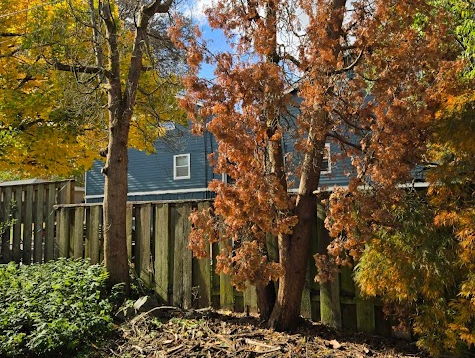
Leaves are often the first place stress shows up. If your tree starts yellowing, browning, curling, or dropping leaves earlier than it should, that can point to root problems, drought stress, poor soil conditions, nutrient issues, or disease pressure.
This is especially worth noticing if nearby trees of the same species still look normal. If your tree is changing ahead of the others, that difference matters. Early fall color, patchy yellowing, and leaves that look dull or sparse compared with previous years can all be signs that something deeper is affecting how the tree is functioning.
When The Canopy Looks Thinner Than It Used To
A thinning canopy is easy to miss because it often happens slowly. You may not notice it day to day, but you do notice it when you compare this season to last season. If the crown looks lighter, uneven, or less full than usual, it is worth paying attention.
This is also where homeowners sometimes talk themselves out of concern. They assume the tree is just having an off year. Sometimes that is true. Sometimes it is not. If the canopy keeps looking thinner, if branch tips are dying back, or if entire sections look less vigorous, you should take that seriously.
The Trunk And Bark Clues Homeowners Often Overlook
Bark is protective tissue, so changes there often matter. Cracks, peeling, sunken spots, oozing areas, or missing bark can all suggest stress, decay, disease, or physical injury. A tree does not need a giant visible wound for the bark to be telling you something important.
Even a smaller damaged section near the base can interfere with how water and nutrients move through the tree. Lawn equipment injury, repeated impact, or old wounds can create long-term problems that do not always look urgent right away.
What The Base Of The Tree Can Reveal
Look at the place where the trunk meets the soil. Do you see a natural flare, or does the trunk disappear straight into mulch or soil?
That detail matters more than many homeowners realize. A buried trunk flare can point to deep planting, excess mulch, root collar problems, and decay risk over time. If the base looks too buried, too wet, or oddly constricted, it is a sign that the tree may be under long-term stress even if the canopy still looks fairly normal.
This is one reason certified arborists are helpful when the signs are not dramatic. They are trained to notice whether the tree’s small warning signals connect to a bigger structural or root problem.
The Growth Patterns That Signal Stress
What if your tree is the only one on the block that looks tired?
That is a useful question. If trees of the same species nearby have leafed out fully, kept normal color, or held onto leaves longer, but yours is lagging behind, there is probably a reason. Trees do respond differently to conditions, but noticeable differences in timing, density, or vigor are often worth checking.
Odd New Growth Can Be A Sign Of Trouble
Stress sometimes shows up as unusual growth rather than obvious decline. Shoots sprouting from the trunk, from lower limbs, or from the base can be a sign the tree is trying to compensate for internal stress. These growths do not always mean the tree is failing, but they do suggest that the tree is responding to strain.
A sudden slowdown in yearly growth can also matter. Many homeowners do not measure tree growth closely, but they do notice when a tree seems to stop progressing or starts looking stalled compared with how it used to perform.
At Urban Timber Tree, this kind of early pattern is often where useful conversations begin. The tree may not look hazardous yet, but it may already be telling you that the site, roots, or overall vigor need attention.
When Fungi, Smells, Or Soft Spots Mean It Is Time To Stop Guessing
Mushrooms or conks on a trunk, near large roots, or around the base of a living tree should never be brushed off as a harmless woodland detail. Fungal growth can point to internal decay or root rot, especially when it appears repeatedly or alongside other symptoms like thinning foliage, deadwood, or bark changes.
You may also notice soft wood, damp areas, or an odor that seems unusual around the base. These are the kinds of signs that often move a tree problem from simple stress into possible structural concern.
Do Not Wait For A Major Failure To Confirm The Risk
If fungi show up together with canopy decline, cracking bark, or dieback, that combination deserves prompt evaluation. Homeowners cannot reliably judge internal decay from the ground just by looking at the outer surface. A tree can still stand upright and still have weakening in the trunk or root zone.
That is where plant health care becomes more than a general service phrase. It is about understanding whether the tree is simply stressed, actively declining, or already dealing with a structural issue that changes how you should respond.
When You Should Call Instead Of Watch And Wait
A tree does not need to look like an emergency before you call an arborist. In fact, the best time to call is often when you are still unsure.
You should reach out if you notice any of these patterns
early leaf drop or color change that does not match nearby trees
thinning canopy or dead branch tips
mushrooms, conks, or soft areas near the base
bark cracking, peeling, oozing, or missing sections
sudden sprouts on the trunk or from the base
a buried trunk flare or obvious root-zone stress
One subtle symptom on its own may not always mean serious trouble. Several subtle symptoms together usually mean the tree deserves a closer look. The longer you wait, the more likely it is that stress piles up and treatment options narrow.
What A Good Arborist Visit Can Help You Understand
A strong arborist visit should help you move from guessing to understanding. You are not just paying for someone to confirm that the tree looks stressed. You are asking for a clearer read on what is causing the change, how urgent it is, and what practical steps make sense next.
That may involve identifying disease pressure, pests, root issues, moisture problems, soil compaction, planting depth concerns, or structural weakness. It may also mean learning that the tree is stable enough to monitor instead of treat aggressively right away. Either way, the value comes from replacing uncertainty with a clear plan.
For homeowners and property managers, that clarity matters. It helps you decide whether the tree needs monitoring, pruning, targeted care, or a broader health strategy before the problem spreads or worsens.
Conclusion
Subtle tree health changes are easy to dismiss because they do not feel urgent. A little thinning, a little yellowing, a few mushrooms, or bark that looks slightly off can all seem minor on their own. But trees often send quiet warnings before they show obvious distress, and those warnings are worth taking seriously.
If your tree is behaving differently than it used to, or differently than similar trees nearby, pay attention to that pattern. You should not assume every small change is a crisis, but you also should not wait until the damage is hard to ignore. When the signs repeat, spread, or cluster together, that is usually the moment to call an arborist and get ahead of a bigger problem.
FAQs
How do I know if a tree problem is serious or just seasonal?
A seasonal change usually happens at the expected time and in a pattern that makes sense for the species. If your tree changes color too early, drops leaves unevenly, or looks noticeably different from similar trees nearby, it is worth having it checked.
Are mushrooms at the base of a tree always a bad sign?
Not always, but they should never be ignored. Mushrooms or conks near the base can point to decay or root issues, especially if they return or appear along with bark damage or canopy decline.
Should I call an arborist for a thinning canopy?
Yes, especially if the thinning is new, getting worse, or affecting only certain sections of the tree. A thinning canopy can be one of the earliest visible signs of stress.
Is peeling bark normal on mature trees?
Some trees naturally shed bark in distinctive ways, but sudden peeling, cracking, missing sections, or oozing areas can signal stress, injury, or disease. If the bark change is new or localized, it is worth evaluating.
Can a stressed tree recover if I catch it early?
Often, yes. Early action can make a big difference because the tree may still have enough vigor to respond well once the underlying issue is identified and addressed.
Early Tree Care That Helps Small Problems Stay Manageable
→ Catch subtle tree health issues before they become bigger concerns
→ Get clear guidance on changes in your canopy, bark, and root zone
→ Protect the long-term health and stability of your trees
With over 2 decades of experience in the tree care industry, Jeremy Wagener is the founder and heart behind Urban Timber Tree Service, a family-owned company dedicated to preserving and enhancing Portland’s urban canopy. As a certified arborist and passionate environmentalist, Jeremy started Urban Timber Tree Service in 2014 to provide expert tree care solutions that promote the health, beauty, and sustainability of Portland’s natural landscape.

 About Jeremy