Tree Service FAQ: Every Question Portland Homeowners Ask, Answered
Most tree service questions come down to three things: cost, timing, and whether you actually need professional help. Since 2014, Urban Timber Tree Service has helped Portland homeowners care for their trees, address potential hazards, and make informed decisions about tree maintenance. This guide covers some of the questions we hear most often, with straightforward answers to help you understand what to expect and when to call a certified arborist.
Whether you are concerned about a leaning Douglas-fir or an overgrown maple blocking your gutters that has been sitting in your yard for years, the information below will help you understand your options and plan your next steps.
In This Post
How Much Does Tree Work Cost?
When Is the Best Time for Tree Service?
Do I Need a Permit in Portland?
How Do I Know If My Tree Is Dangerous?
What Happens During the Job?
How Much Does Tree Work Cost?
This is one of the first questions homeowners ask before scheduling tree work. The honest answer is that pricing varies based on the size and condition of the tree, its location, the complexity of the job, and the type of service needed. A small ornamental tree that needs light pruning will generally cost less than a 100-foot conifer growing between a house and a neighbor’s fence.
Several factors influence the final estimate. Tree height matters because taller trees may require specialized equipment, additional crew time, and more safety precautions. Access is another major consideration. If a crane or specialized rigging is needed to lower limbs safely over a roof or other structures, the job can take longer and cost more.
Tree species also plays a role. Dense hardwoods, such as oak, can be heavier and more challenging to handle than some other species. The tree’s condition matters, too. Dead, decaying, or structurally compromised trees can present additional hazards and may require specialized removal techniques.
We recommend getting a written estimate after an on-site assessment. Phone quotes based on a description alone may not account for important details that affect the work. A reputable tree service company will evaluate the tree, consider nearby structures and access, and explain the recommended work before providing an estimate.
When Is the Best Time for Tree Service?
The best time for tree service depends on the type of work, the tree species, and the tree’s condition. In Portland, late fall and winter can be suitable for many routine tree maintenance projects, but not every tree or situation follows the same schedule.
For some deciduous trees, dormant-season pruning can make the branch structure easier to assess. However, the ideal pruning time varies by species, and some trees are better pruned at other times of the year. A certified arborist can recommend an appropriate schedule based on the tree’s health, growth habits, and maintenance needs.
Fall is also a good time to assess trees before Portland’s winter storms arrive. Fall rain and stronger winds can expose existing weaknesses in dead branches, cracked limbs, and poorly attached branches. An inspection can help identify concerns before winter weather puts additional stress on the tree.
Some situations require prompt attention regardless of the season. A tree that develops a sudden lean, shows signs of root failure, or has large broken limbs following a storm should be evaluated as soon as it is safe to do so. Do not wait for the next routine maintenance visit if a tree appears unstable or threatens people or property.
Tree removal can be performed throughout the year when conditions allow. However, Portland’s wet winter weather can make access more difficult and increase the need for precautions to protect lawns, landscaping, and surrounding structures. Stump grinding is also possible in different seasons, depending on ground conditions and site access.
If you are planning routine tree trimming, removal, or other maintenance, scheduling an assessment in fall can help you address potential concerns before winter. Plant health care assessments can also help identify pests, diseases, and environmental stresses that may affect your trees over time.
Do I Need a Permit in Portland?
Portland has specific regulations governing tree removal, and a permit is required for many tree removal projects. The requirements depend on the tree’s size, location, condition, and whether it is on private property, along a street, or within a regulated environmental zone or plan district.
For trees on private property, the general rule is straightforward: if the trunk measures 12 inches or more in diameter at 4.5 feet above the ground (about chest height), you will likely need a permit to remove it. Trees measuring 20 inches or larger face stricter removal requirements and generally must be dead, dying, or dangerous; located within 10 feet of a building or attached structure, such as a deck; or classified as a nuisance species to qualify for removal. Street trees, which are planted between the sidewalk and the curb, follow separate regulations, and a permit is required before removing one, regardless of size. If your property is in an environmental overlay zone or plan district, smaller trees may also be subject to additional regulations.
A qualified tree service company can help you understand the permitting process and determine what steps may be needed before work begins. AtUrban Timber Tree Service, we encourage homeowners to verify applicable requirements before authorizing tree removal.
Removing a regulated tree without the required approval can result in penalties and replacement requirements. Do not assume that a tree can be removed without a permit simply because it is damaged or appears hazardous. Emergency situations and hazardous trees may qualify for specific provisions, but the applicable rules should be confirmed with Portland Urban Forestry.
When you are unsure whether a tree can be removed, start by checking the city’s requirements and arranging a professional assessment. This can help you avoid unnecessary delays and make an informed decision about your property.
How Do I Know If My Tree Is Dangerous?
Some warning signs are obvious, such as a tree leaning at a new angle after a storm or large dead branches hanging over a driveway. Others are less noticeable and may require a closer inspection. Knowing what to look for can help you recognize when a tree needs professional attention.
Cracks in the trunk or major limbs can indicate structural weakness. Deep cracks, splits where branches attach to the trunk, or areas where the wood appears to be separating deserve attention. Not every crack means a tree must be removed, but significant structural defects should be evaluated by a qualified professional.
Cavities and signs of decay may indicate that a tree’s internal structure has weakened. Some trees can continue living with cavities or internal decay, but the extent and location of the damage affect the level of risk. A certified arborist can assess the tree’s condition and determine whether further action is needed.
Fungal growth on the trunk or near the base can be another warning sign. Mushrooms and conks may indicate fungal activity associated with wood decay or root problems. Their presence does not automatically mean a tree is unsafe, but it can be a reason to schedule an inspection.
A sudden lean or disturbed soil is particularly concerning. If a tree begins leaning more noticeably or the ground around its base appears lifted or cracked, its root system may be compromised. Keep people away from the potential fall area and seek professional advice promptly.
Dead or broken branches can also create hazards, especially when they extend over homes, walkways, driveways, or areas where people gather. Deadwood may become more likely to break during strong winds or storms. The amount of deadwood, its location, and the tree’s overall condition will help determine the appropriate response.
If a tree has extensive canopy dieback, repeated branch failure, or several signs of declining health, it should be assessed rather than judged by appearance alone.
When in doubt, schedule an inspection with a certified arborist. Depending on the findings, the recommendation may involve selective pruning, additional monitoring, appropriate plant health care, or removal if the risk cannot be managed adequately. Professional evaluation helps you understand the options before making a decision.
What Happens During the Job?
Understanding what to expect on the day of service can help the work go smoothly. Before the crew arrives, clear the area around the tree as much as possible. Move vehicles, patio furniture, and other items away from the work zone. If the tree is close to your home, the crew may recommend moving additional belongings or protecting nearby landscaping.
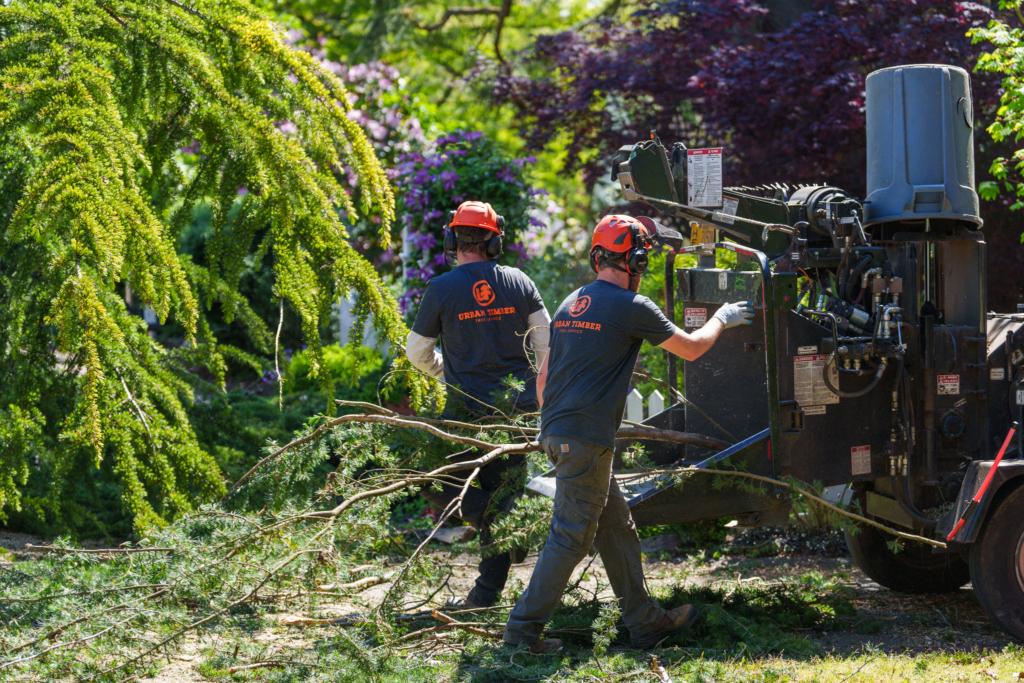
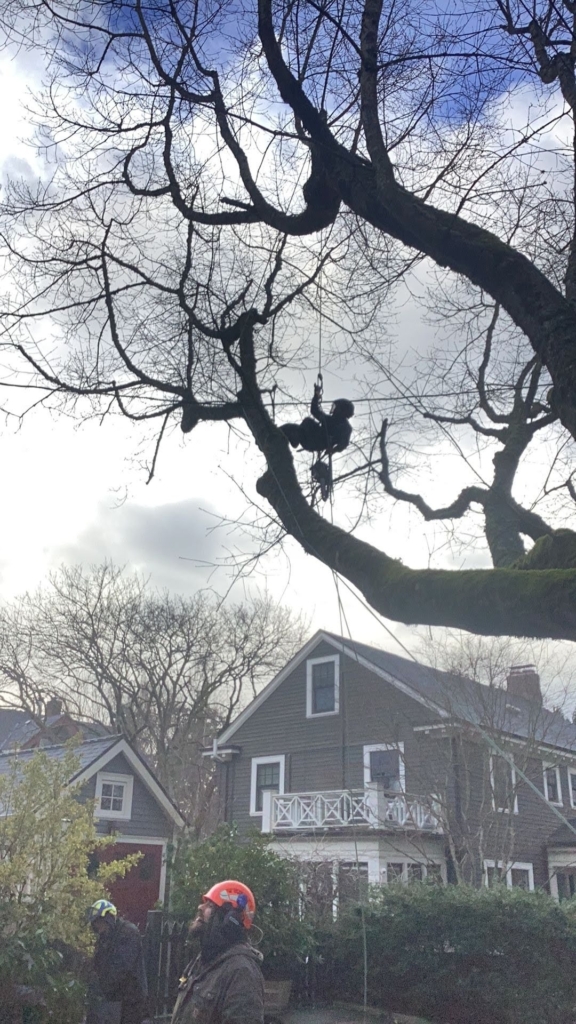
For tree trimming jobs, the crew may use hand saws, pole saws, chainsaws, climbing equipment, or a bucket truck, depending on the tree and site conditions. A trained climber may access the canopy using appropriate ropes and equipment. Branches may be lowered with rigging or cut into manageable sections to help protect nearby structures and landscaping.
Tree removal is often more involved. The crew will assess the tree’s condition, lean, surrounding obstacles, and available work area before determining the safest removal method. In confined spaces, the tree may need to be dismantled piece by piece from the top down. Rigging allows trained crews to lower selected sections in a controlled manner when site conditions require it.
Once the tree has been removed, the crew will cut the trunk and branches into manageable pieces. Depending on the agreement, you may be able to keep some of the wood for firewood or have it hauled away.
Stump grinding is generally a separate service. The grinder cuts the stump below ground level, leaving a mixture of sawdust and dirt that can often be used to fill the resulting depression or removed from the site. The remaining roots are typically left underground and decompose over time.
Cleanup arrangements should be discussed before the job begins. Depending on the agreed scope of work, the crew may rake debris, clear hard surfaces, and haul away branches and wood. If you want to keep logs or use the wood chips in your landscaping, let the company know in advance.
A professional crew should explain the planned work, address safety considerations, and clarify what is included in the estimate so you know what to expect.
If you have been putting off a tree project or have questions about a specific tree on your property, fall is a practical time to plan ahead before winter weather arrives. An on-site assessment can help you understand your tree’s condition and determine which services are appropriate.
With over 2 decades of experience in the tree care industry, Jeremy Wagener is the founder and heart behind Urban Timber Tree Service, a family-owned company dedicated to preserving and enhancing Portland’s urban canopy. As a certified arborist and passionate environmentalist, Jeremy started Urban Timber Tree Service in 2014 to provide expert tree care solutions that promote the health, beauty, and sustainability of Portland’s natural landscape.