How To Choose The Right Tree Service For Your Property
If a heavy limb came down tonight, would you feel confident that the company you hired would protect your home, our neighbors, and the rest of your landscape? Choosing a tree service can look simple from the street, but the work is high risk and the difference between a careful plan and a rushed one shows up fast. A bad decision can lead to roof damage, crushed fencing, torn lawns, or worse, someone getting hurt. A good decision usually feels quiet. The crew shows up prepared, the job runs smoothly, and the yard looks respected when they leave.
Table Of Contents
- Start With The Outcome You Want
- Credentials And Safety Practices We Can Confirm
- Comparing Estimates Without Guessing
- What Should Happen After The Final Cut
- Conclusion
- FAQs
You do not need to become experts to hire well. You just need to ask the right questions and compare companies based on safety, clarity, and the quality of the plan. This guide is meant to help you choose a provider that fits your property, your priorities, and the kind of outcome you actually want.
Start With The Outcome You Want
Before you call anyone, you should get clear about what success looks like. Are you trying to reduce weight over the roof? Are you trying to remove a hazard near the driveway? Are you trying to keep a mature tree and improve its structure so it lasts longer? Many frustrating estimates happen because you describe the job loosely and the company fills in the blanks with whatever they prefer to sell.
Here is a creative question that usually tightens the conversation right away. If you could only change one thing about this tree by next week, what would it be? More clearance from the house. Less deadwood. Better balance. Less risk over a walkway. More light in the yard. When we name the outcome, it becomes easier to spot who is listening and who is pitching.
It also helps to be honest about urgency. A cracked limb hanging over a porch is different from routine maintenance. If you are being pushed to make an immediate decision on a non emergency, you should pause. The right company will respect careful decision making, especially when property and safety are involved.
The Two Sentence Summary That Helps Everyone
When you describe your situation clearly, you get better estimates and fewer surprises. You can aim for two sentences. One sentence describes where the tree is in relation to targets like the home, driveway, neighbors, fences, and lines. The second sentence describes what outcome you want.
If you can take a few photos from different angles, the conversation becomes more accurate. It also helps you notice constraints ourselves, like a narrow access path, a steep slope, fragile landscaping, or a tight drop zone. Those details affect how the job is done and how much risk is being managed.
You should also decide what matters after work. Do you want the debris hauled away? Do you want chips left for mulch? Do you want logs cut for firewood? Do you want the stump addressed? Not every company includes those items by default, and assumptions are where misunderstandings happen.
For many properties, the conversation begins with tree trimming, but the best plan depends on risk, structure, and what you want the landscape to look like afterward.
Credentials And Safety Practices We Can Confirm
Tree work is not the place for vague assurances. A professional company should be comfortable sharing credentials, insurance details, and safety practices. If those questions are brushed off, that is useful information.
A question that cuts through the noise is this. If something goes wrong on your property, who pays for it. You should expect clear answers backed by proof, not a casual yes. It is reasonable to ask for a current certificate of insurance. It is also reasonable to confirm that workers compensation coverage is in place, so an injury does not become a homeowner problem.
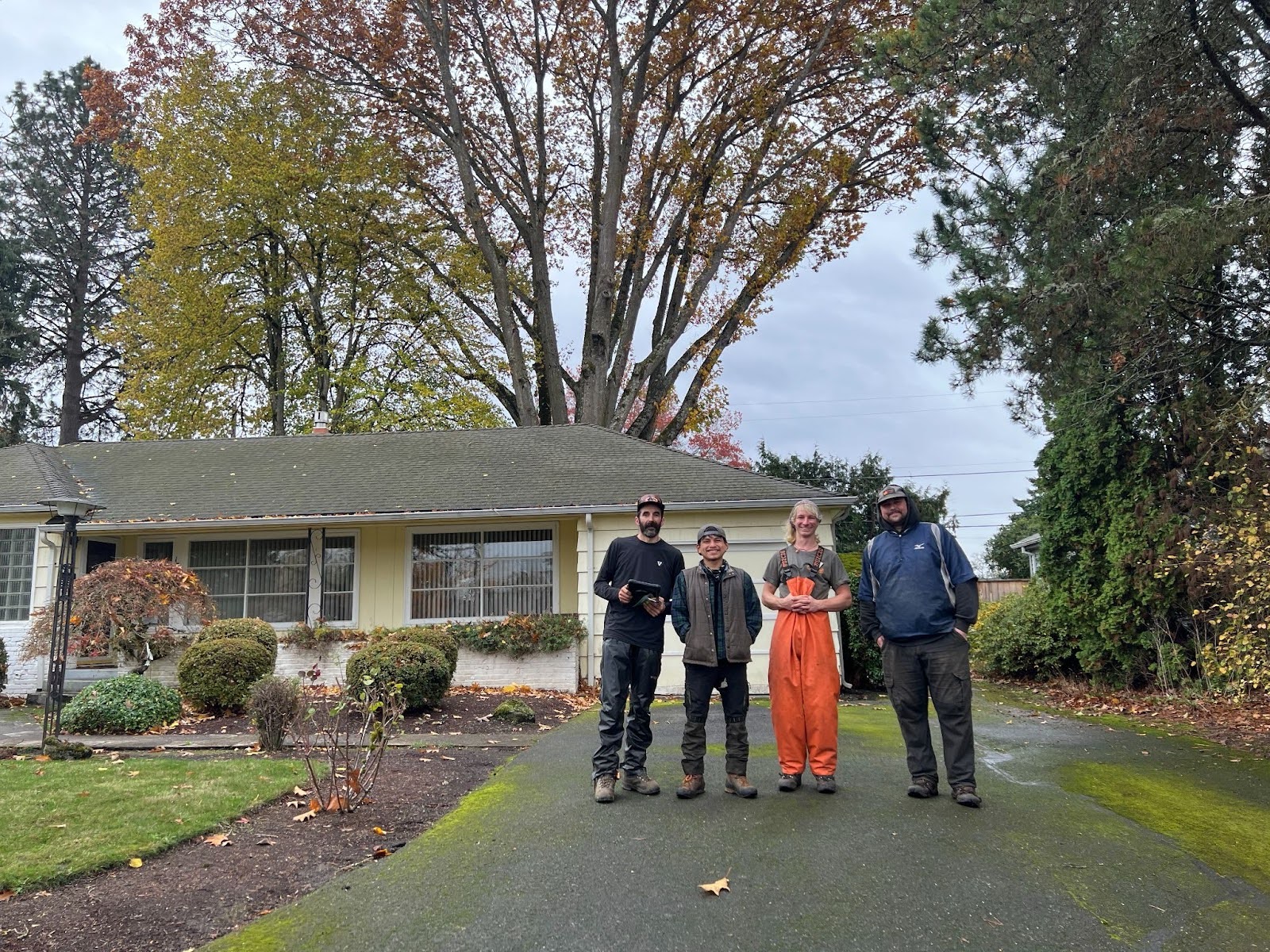
Training and experience matter most on complicated jobs, especially near homes, tight lots, and overhead hazards. You do not have to memorize certifications, but you can ask who will lead the job and how decisions will be made on site. With Urban Timber Tree, you can be sure that the work will be led by certified arborists who have experience with your tree species and the specific risks on the property.
Another creative question that helps reveal professionalism is this. What is the worst case scenario on this job and how is it prevented? A good company will talk about controlled lowering, rigging, drop zones, and protection of targets. A careless company will minimize risk or speak as if nothing can go wrong.
What Insurance And Supervision Should Look Like
You do want to know who is actually showing up and who is responsible. You should ask who will supervise the crew on site, and you should ask how communication will work during the job. If a limb is being lowered over a roofline, you want coordination, not improvisation.
Also ask about permits and local requirements when they apply. Some cities have rules around protected trees, street trees, and removals. A professional service should be able to explain whether permits are needed and how that process is handled.
If the job involves working near power lines, be extra cautious. Line clearance work can require specialized training and coordination. Don’t assume every company is equipped for that. A good answer will sound specific and careful, not casual.
This is also the moment to ask how the property will be protected. Will mats or plywood be used to protect the lawn. How will fences, garden beds, and hardscapes be protected? Where will equipment be staged? If the company cannot describe a protection plan, you should expect marks and damage.
Comparing Estimates Without Guessing
Two tree quotes can look similar while covering very different work. One may include full cleanup and haul away. Another may leave debris behind. One may include careful rigging to avoid damage. Another may assume a big drop zone that we do not actually have. The cheapest quote can become the most expensive if scope is unclear.
A creative question that helps is this. What would make this job more expensive on the day of the work? A good company will answer calmly and specifically, such as hidden decay, changes to work zone, unexpected hazards, extra protection for landscaping, or permit requirements. Those reasons are normal. Vague answers are not.
- Will the estimate be written with a clear scope and cleanup details
- What debris handling is included and what is optional
- How will structures and landscaping be protected
- What equipment will be used and why it is needed
- What could change the price and how we would be notified
- What timeline is expected and how weather affects scheduling
If a company refuses to provide a written scope, be cautious. A written scope protects both sides and prevents misunderstandings. It also helps us compare bids fairly.
Also pay attention to how the estimate feels. Are your questions welcomed? Is the plan explained in plain language? Are risks acknowledged without drama.
What Should Happen After The Final Cut
The end of the job is where quality becomes obvious. Cleanup matters, but a professional finish is also about leaving the site safe and helping us understand what comes next.
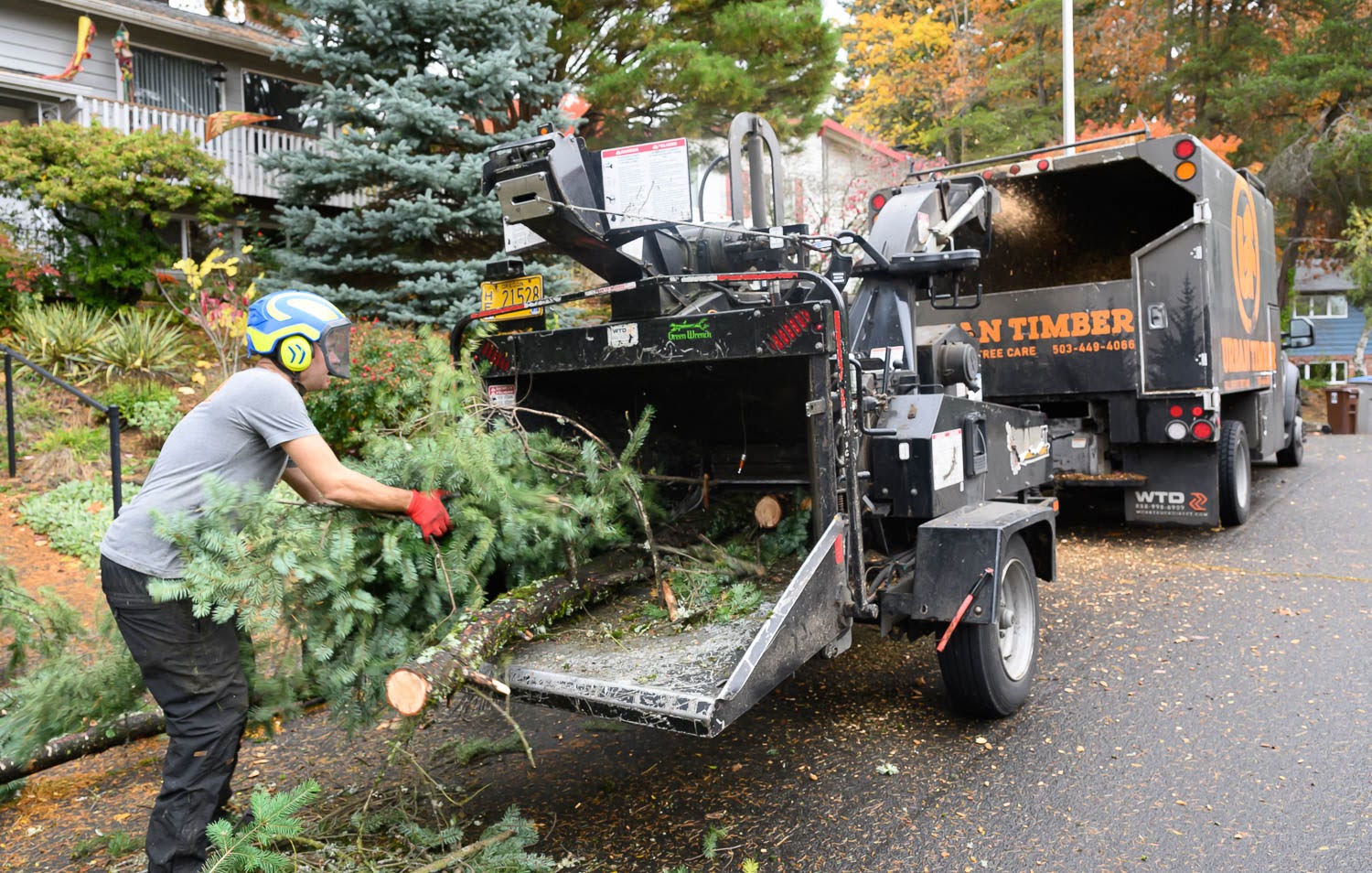
Ask what cleanup looks like in practice. Will the yard be raked and blown. Will the driveway and sidewalks be cleared? Will small debris be removed from garden beds. If chips are left, where will they go and how much should you expect? If logs are left, will they be bucked into manageable lengths or left as heavy logs.
If a stump will remain, ask whether it will be cut flush and whether it will create a trip hazard. If stump grinding is offered, ask what depth is typical and what happens to the grindings. We also ask whether the surrounding area will be restored, especially if equipment has compacted soil or disturbed turf.
We also ask about follow up. If a tree was pruned for structure, will a follow up inspection be recommended in a year or two. If support hardware was installed, when should it be checked. If a diseased tree was removed, should nearby trees be monitored. Those answers help us protect our property long after the crew is gone.
Here is one more creative question that often reveals honesty. If this were your own house, what would you do differently than what we asked for? A thoughtful provider may suggest a small adjustment that improves safety or preserves a healthy tree. A pushy provider will try to sell unrelated work.
Tree experts like those at Urban Timber Tree can provide the kind of planning and care that makes the whole process feel calmer and safer. Our company distinguishes itself by focusing on key areas: prioritizing many years of proven experience over mere accolades, employing ISA Certified Arborists with deep knowledge, being fully licensed, bonded, and insured, and maintaining clear, seamless communication from the office to the on-site crew.
Conclusion
Choosing the right tree service comes down to proof, planning, and clarity. We want a company that can verify insurance, explain who supervises the work, and provide a written scope that covers cleanup and risk management. We want a job plan that fits our property, protects structures and landscaping, and leaves the site safe when the work is done.
When you choose based on safety and transparency rather than price alone, you usually get better outcomes and fewer surprises. And you gain a team we can trust the next time wind, age, or growth creates a new concern in the yard.
FAQs
How many estimates should we get for tree work?
We usually get two or three written estimates. That is enough to compare scope, safety planning, and cleanup without creating decision fatigue.
What proof of insurance should we ask for?
A current certificate of insurance should be requested. Liability coverage and workers compensation coverage should be confirmed so risk is not shifted onto the homeowner.
How can we tell if a quote is missing important details?
We look for missing information about debris handling, cleanup, protection of structures and landscaping, and what could trigger a price change. If it is not in writing, we ask for it.
Should we always remove a leaning tree?
Not always. Leaning can be natural for some trees, but it can also signal root issues or structural problems. The right decision depends on tree health, stability, and targets below.
What questions reveal professionalism the fastest?
We ask who will supervise on site, how the work zone will be kept safe, what equipment will be used and why, how property will be protected, and how unexpected issues would be handled and priced.
Urban Timber Tree – Choose the right tree service with confidence
→ ISA Certified Arborists you can trust for honest, expert guidance
→ Clear, no-pressure recommendations tailored to your property and priorities
→ Safe, clean work from start to finish with respect for your home and landscape
Schedule a Portland tree assessment with Urban Timber Tree and get the right plan for your trees →
★★★★★ Rated 4.9/5 by 109+ Satisfied Clients
About Jeremy
With over 2 decades of experience in the tree care industry, Jeremy Wagener is the founder and heart behind Urban Timber Tree Service, a family-owned company dedicated to preserving and enhancing Portland’s urban canopy. As a certified arborist and passionate environmentalist, Jeremy started Urban Timber Tree Service in 2014 to provide expert tree care solutions that promote the health, beauty, and sustainability of Portland’s natural landscape.
Related Articles:
How Portland’s Rainy Weather Affects Tree Health (and What You Can Do)
How Proper Pruning Keeps Your Trees Healthy and Strong